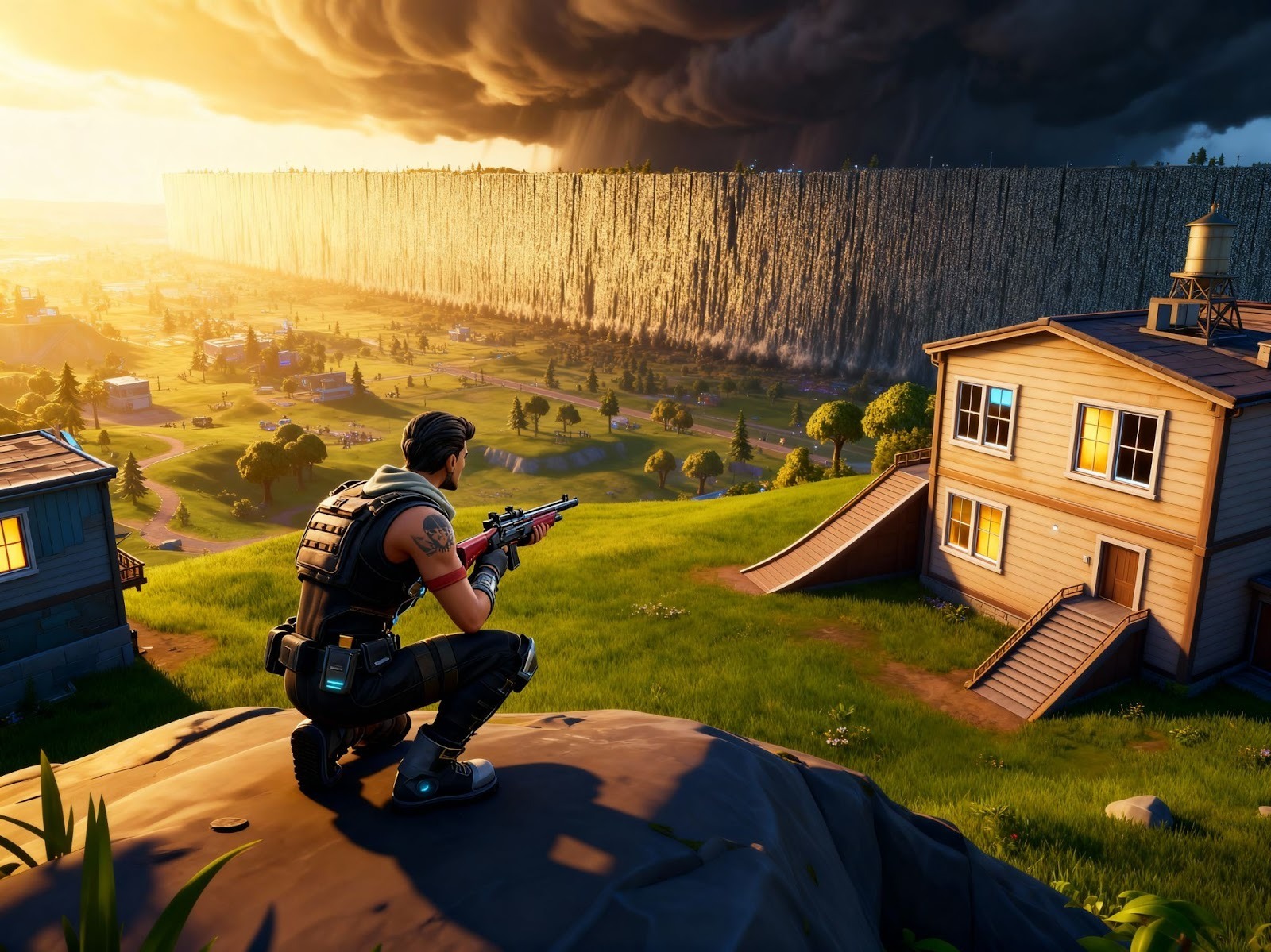
Fortnite has a funny way of humbling good aim. Early lobbies reward fast fingers and sharp reflexes. Later lobbies quietly punish anyone who relies on those alone. Shots still matter, obviously, but by the time players face disciplined opponents, most fights are already decided long before the trigger is pulled.
That decision happens in positioning, loadout choices, rotation timing, and how pressure is handled when the storm tightens. High level Fortnite does not remove mechanical skill from the equation. It simply stops treating it as the main character. That is also why you might choose to buy a Fortnite account that already sits at a competitive level, skipping the early grind.
Aim Wins Duels. Decisions Win Matches.
Community consensus across Arena, Ranked, and tournament play is clear. Mechanical skill is a baseline, not a separator. Once players can track, build, and edit at a competent level, decision quality becomes the real advantage.
This shows up everywhere. The player who lands first shot from cover often wins. The player who forces a bad angle usually does not need perfect aim. The player who enters a fight with full shields and a plan wins against someone reacting on instinct.
Aim is execution. Decisions create conditions.
Positioning Is the First Damage You Deal
Positioning in Fortnite is not just about high ground, although high ground remains powerful. It is about controlling sightlines, limiting exposure, and forcing opponents into predictable movement.
Good positioning does three quiet things:
• Reduces incoming damage
• Increases hit probability
• Buys time to disengage
Players who win consistently choose spots that offer at least one hard escape option. Natural cover. A nearby build path. A rotation route already planned.
Bad positioning is loud. Open fields. Low ground with no mats. Peeking from predictable angles. These mistakes get punished instantly once lobbies improve.
A useful mental check before taking a fight:
Can this spot protect me if the third party shows up?
If the answer is unclear, the position is already losing value.
Loadouts Shape Decisions More Than Skill
Fortnite loadouts quietly dictate how a fight must be played. This is widely discussed in competitive communities and reinforced every season as weapon pools shift.
A loadout is not a collection of strong items. It is a plan.
For example, a shotgun plus SMG setup demands close range pressure. Add mobility and that plan gets sharper. Replace mobility with healing and suddenly disengagement becomes slower.
Common loadout roles stay consistent across seasons:
• Primary damage for close fights
• Mid range pressure or tags
• Mobility to control engagement distance
• Healing for reset windows
Players who struggle often carry strong weapons that do not work together. The result is hesitation mid fight. Hesitation kills faster than bad aim.
Winning players know exactly how their loadout wants to be used before the fight starts.
Rotation Timing Decides Who Fights on Their Terms
Rotation is one of the most underappreciated skills in Fortnite. It is also one of the most punishing to ignore once storm circles shrink.
Early rotations reduce pressure. Late rotations increase it.
Community tournament analysis consistently shows that players who rotate early gain better positions, conserve materials, and avoid forced fights. Late rotators arrive tired, low on mats, and already damaged.
Rotation timing influences fights in subtle ways:
• Early rotators choose terrain
• Late rotators react to terrain
• Center positioning reduces third party risk
• Edge positioning increases unpredictability
Neither approach is wrong. What matters is intention. Rotating late without a plan turns every fight into a scramble. Rotating early with purpose turns fights into controlled engagements.
The storm is not just a timer. It is a tool.
Decision Pressure Is the Real Skill Gap
As lobbies get tougher, players feel pressure sooner. Fewer mistakes go unpunished. Third parties arrive faster. Healing windows shrink.
Under pressure, habits surface.
Some players tunnel vision on eliminations. Others panic build. Some freeze and wait too long. These reactions are not about aim. They are about decision discipline.
Strong players simplify under pressure. They reduce options instead of expanding them.
Common pressure management habits seen in top play:
• Disengaging early instead of forcing trades
• Taking small advantages rather than chasing clips
• Resetting fights when health drops below threshold
• Accepting lost positions and rotating out
This is why experienced players often look calm even in chaos. They already decided what matters before the fight started.
Fighting Is Optional More Often Than It Feels
One of Fortnite’s quiet truths is that many fights do not need to happen. Especially mid game.
Community advice aimed at climbing Ranked often emphasizes selective aggression. Not passive play, but intentional fights.
Reasons to take a fight:
• Clear positional advantage
• Resource gain is likely
• Zone control improves
• Opponent is isolated
Reasons to avoid a fight:
• Storm pressure approaching
• Third party risk is high
• Loadout mismatch
• Low materials
Players stuck at a plateau often fight because they feel they should, not because the fight benefits them.
Fortnite rewards restraint as much as confidence.
Information Wins Before Damage Does
Information gathering is a skill rarely labeled as such. Sound cues, visual scans, map awareness, and memory of nearby rotations all feed better decisions.
High level players constantly track:
• Where shots were heard
• Who rotated early
• Which builds are fresh
• How many teams remain nearby
This information influences positioning choices long before combat. By the time a shot is fired, the fight is already shaped by what was noticed earlier.
Ignoring information turns fights into coin flips. Using information turns them into controlled risks.
Mechanical Skill Still Matters, Just Later
None of this dismisses aim or mechanics. Fortnite still demands execution. Missed shots lose fights. Bad edits get punished.
The difference is order.
Mechanical skill matters most after decisions are made. Strong decisions create easier shots. Poor decisions demand perfect aim to recover.
This is why mechanically gifted players still stall. Their execution is sharp, but their setup is sloppy.
Fix the setup and the mechanics finally shine.
This takes seconds, not minutes. The habit matters more than the speed.
Fortnite Rewards Thinking Ahead
As Fortnite evolves, Epic continues to add mechanics, mobility options, and map changes. The core truth remains stable. Winning fights is less about reacting well and more about arriving prepared.
Smart positioning removes damage before it exists. Thoughtful loadouts prevent panic. Clean rotations reduce pressure. Calm decisions turn chaos into opportunity.
READ MORE: Quizlet Live Join Explained: Fun, Fast, and Free Learning Games
About the Author